
RCV 101
 |
|
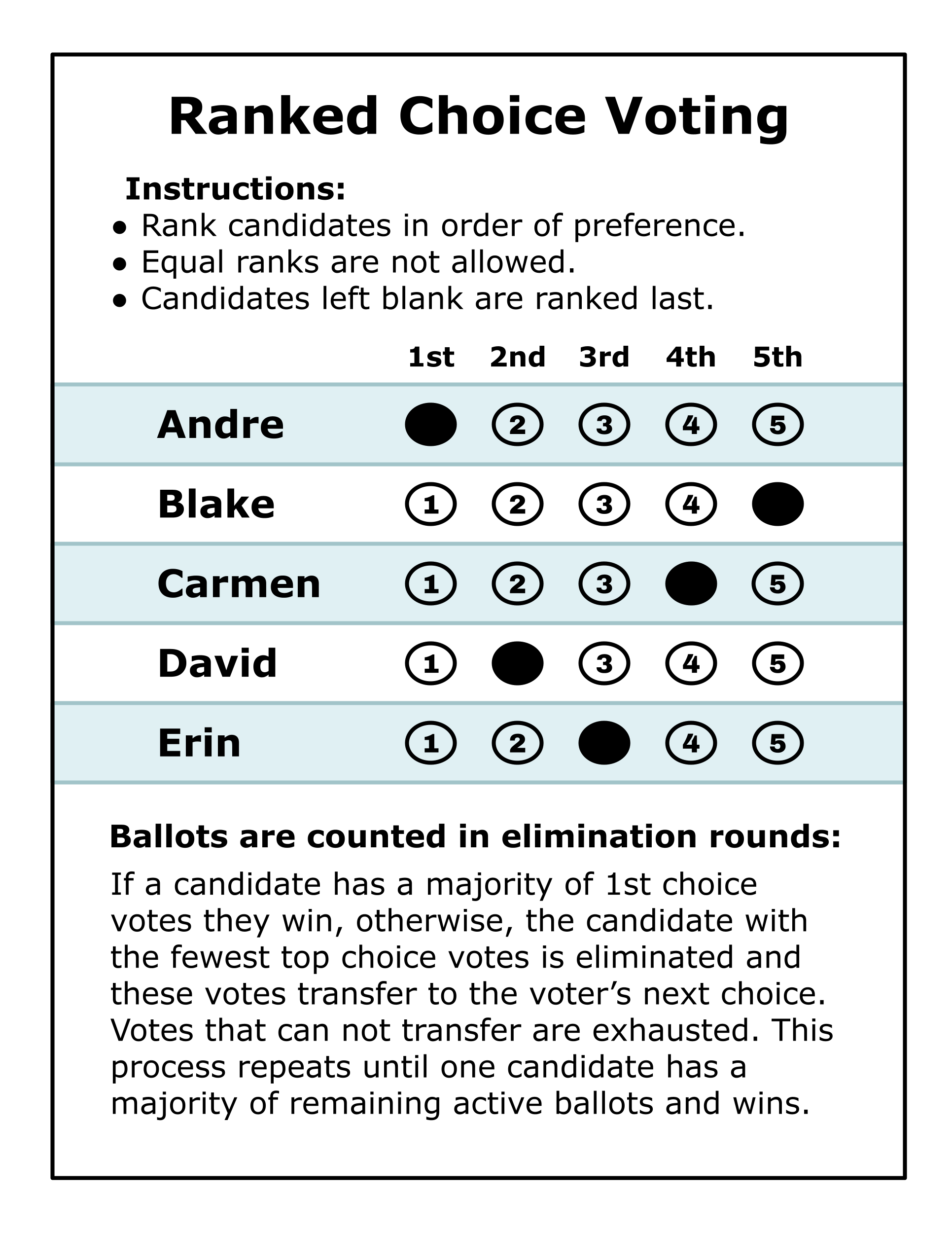
Ballots are counted in elimination rounds: If a candidate has a majority of 1st choice votes they win, otherwise, the candidate with the fewest top choice votes is eliminated and these votes transfer to the voter’s next choice. Votes that can not transfer are exhausted. This process repeats until one candidate has a majority of remaining active ballots and wins. |
 |
|
Video: How Does RCV Work? With sticky notes! Join us for a clear, thorough video demonstration of how Ranked Choice Voting works using colored post-it notes! Rankings, elimination rounds, vote transfers, exhausted ballots, and majority winners - this video covers it all in the detail you need to explain RCV perfectly -- start to finish. |
 |
|
Is it time to think beyond RCV? A zine from the Equal Vote Coalition We love being able to show our preferences. We want to vote our conscience. But is RCV really the best option? |
Real RCV Case Studies
 |
|
Real world RCV election data visualized. This is a featured case study on a the first ever RCV election held in Alaska, in which the candidate preferred over all others lost and the election directly disproved the main talking points that the reform had been sold on. |
 |
|
The Real RCV Case Studies project from the Equal Vote Coalition models and visualizes high profile RCV elections to look at who won, what happened, and what pathologies were reported, if any. RCV has the longest track record of all alternative voting methods, but until recently the actual ballot data for most of the US public elections hadn't been released. That changed after the 2022 Oakland, California election miscount went undetected. Today, we have the full database of RCV elections in the US and beyond. We dug into that data to see what the record actually shows. |
Comparing the Options
 |
|
A Renaissance in Voting Reform: RCV v STAR Ranked Choice and STAR Voting are both preference voting methods and they have a lot in common, but they also have significant differences which should be carefully considered. |
 |
|
Comparing Voting Systems: A Report Card Take a closer look at 3 voting systems under consideration. Choose-One Plurality, STAR Voting, and Instant Runoff Voting (Ranked Choice) as we compare them point by point according to the 5 central pillars of a just voting system. |
 |
|
STAR Voting and Ranked Choice: Pros and Cons Our current voting method, 'Choose-One' Plurality or First-Past-The-Post, is only fair and accurate if there are two candidates in the race. We can do better! But what’s the best alternative? STAR or RCV? Here we present the pros and cons. |
Deeper Dives
 |
|
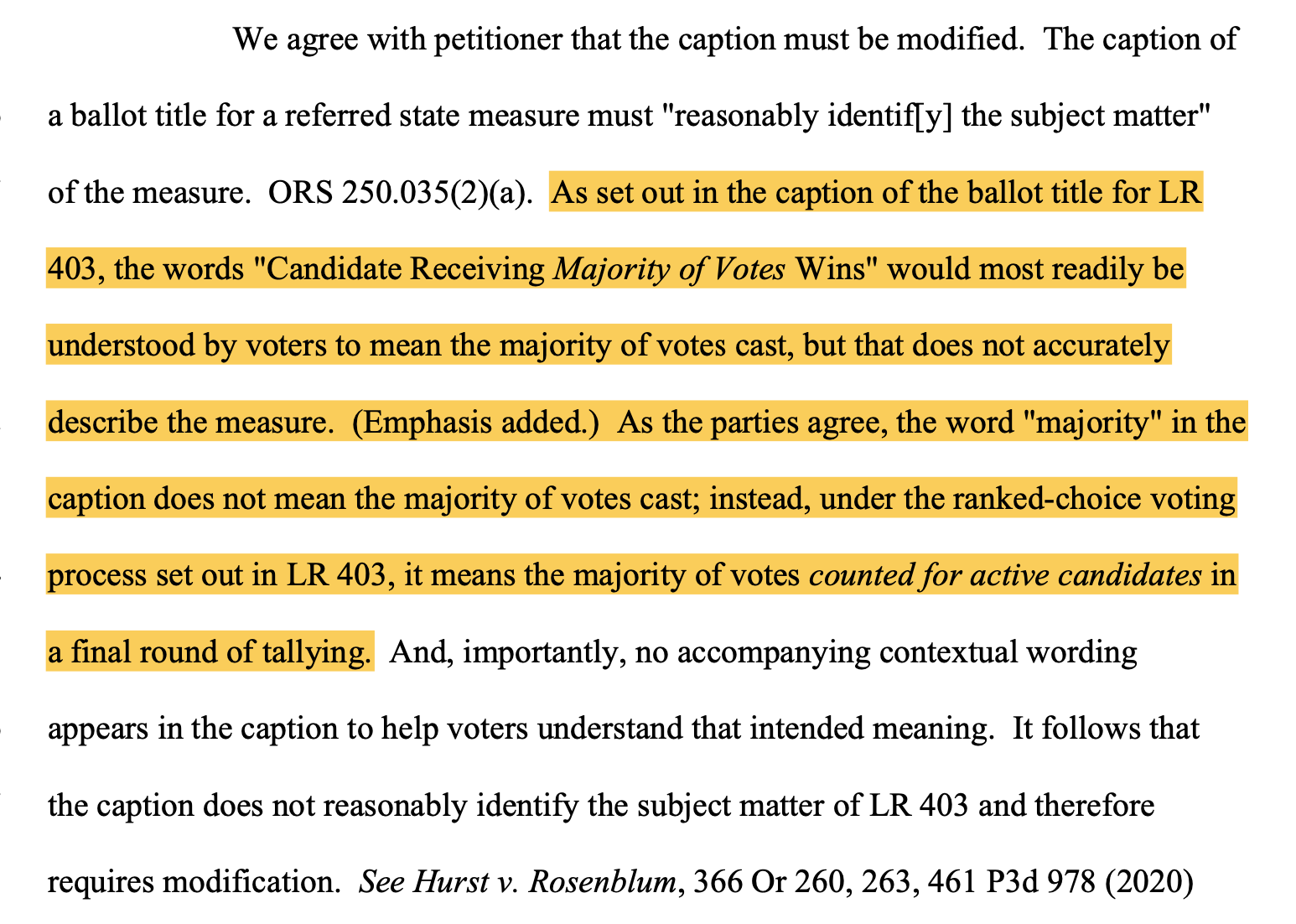
Oregon Supreme Court Ruling on RCV's misleading "Majority" Claim "We agree with petitioner that the caption must be modified. The caption of a ballot title for a referred state measure must "reasonably identify the subject matter" of the measure. ORS 250.035(2)(a). As set out in the caption of the ballot title for LR 403, the words "Candidate Receiving Majority of Votes Wins" would most readily be understood by voters to mean the majority of votes cast, but that does not accurately describe the measure." "As the parties agree, the word "majority" in the caption does not mean the majority of votes cast; instead, under the ranked-choice voting process set out in LR 403, it means the majority of votes counted for active candidates in a final round of tallying." |
 |
|
A Farewell to Pass/Fail: Why We Ditched Later No Harm STAR Voting is simple. 5-Best, 0-Worst. As a rule of thumb, it's a good idea to give your favorite or favorites a full five stars, give your worst candidate or candidates zero stars, and arrange the others in between. |
 |
|
Q and A for the PDX Charter Review Commission On October 28th, 2021, the Portland Charter Review Commission Subcommittee on 'Form of Voting' met with Sara Wolk, Executive Director at Equal Vote and also Mike Alfoni with Oregon RCV to discuss and compare STAR Voting and Ranked Choice Voting. |